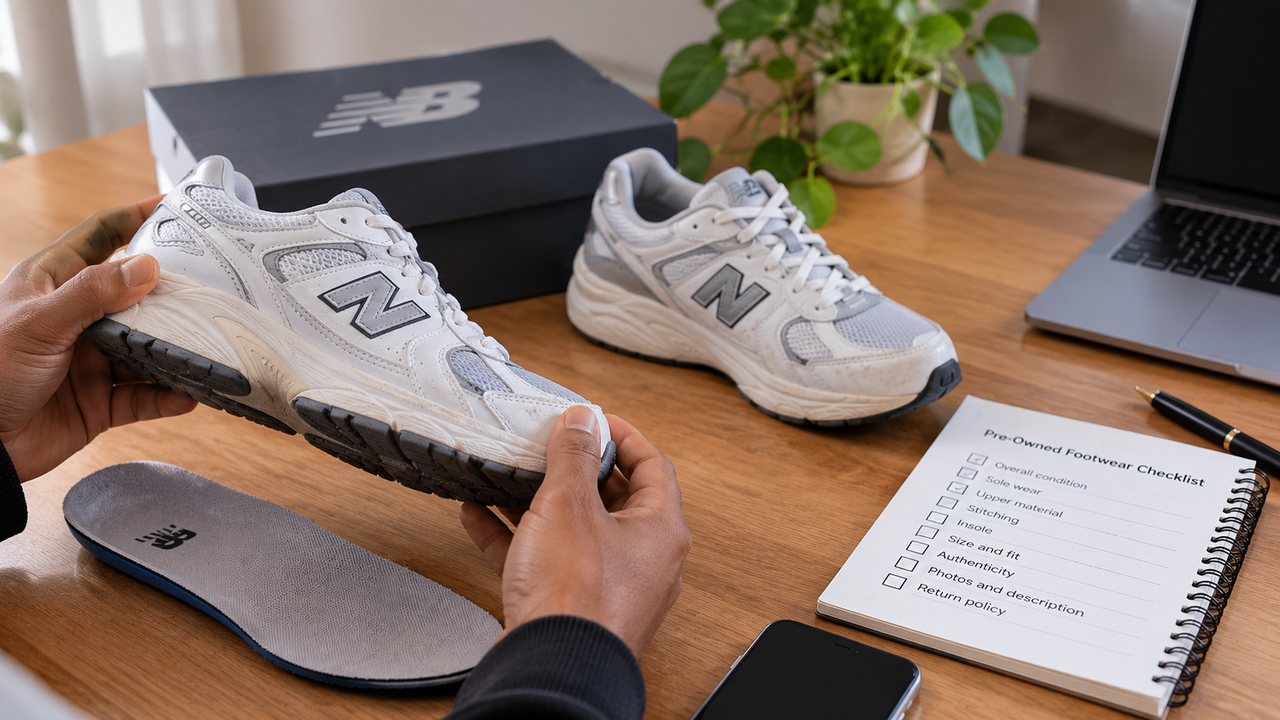
What to Check Before Buying Pre-Owned Footwear
By Aethelles · Published 30 October 2026
Before buying pre-owned footwear, confirm the labelled size and model, inspect outsole and midsole, check upper and lining, review hygiene information, identify repairs or damage and read condition and returns information.
Confirm type, model and size
Identify whether the item is a sneaker, boot, sandal or other footwear. Check brand, model and labelled size. Compare the size with manufacturer guidance; fit varies by model and foot shape.
Outsole and midsole
Look for uneven wear, worn tread, cracks, separation, compression and deterioration. Old foam and adhesives can age even when footwear has not been worn often.
Upper and lining
Check tears, holes, creasing, stains, peeling, loose seams, heel lining and insole wear. Review materials and any repairs or replacement components.
Hygiene and intended use
Review any cleaning or hygiene information. Footwear suitable for casual use may not be appropriate for running, court sport, work safety or hiking. Confirm specialised footwear standards and suitability rather than relying on appearance.
Aethelles listings
Aethelles product pages should state size, condition, photographs and known details. Selected pre-owned items undergo internal inspection. Customers should review the individual item and ask questions before ordering.
Frequently asked questions
Is it hygienic to buy second-hand shoes?
Suitability depends on condition, cleaning, materials and the buyer's circumstances.
Can old sneakers deteriorate unworn?
Yes. Materials and adhesives can age during storage.
Should I use pre-owned running shoes for running?
Assess cushioning, outsole wear and structure; appearance alone does not establish suitability.
What areas should I inspect?
Review outsole, midsole, upper, heel lining and insole together.