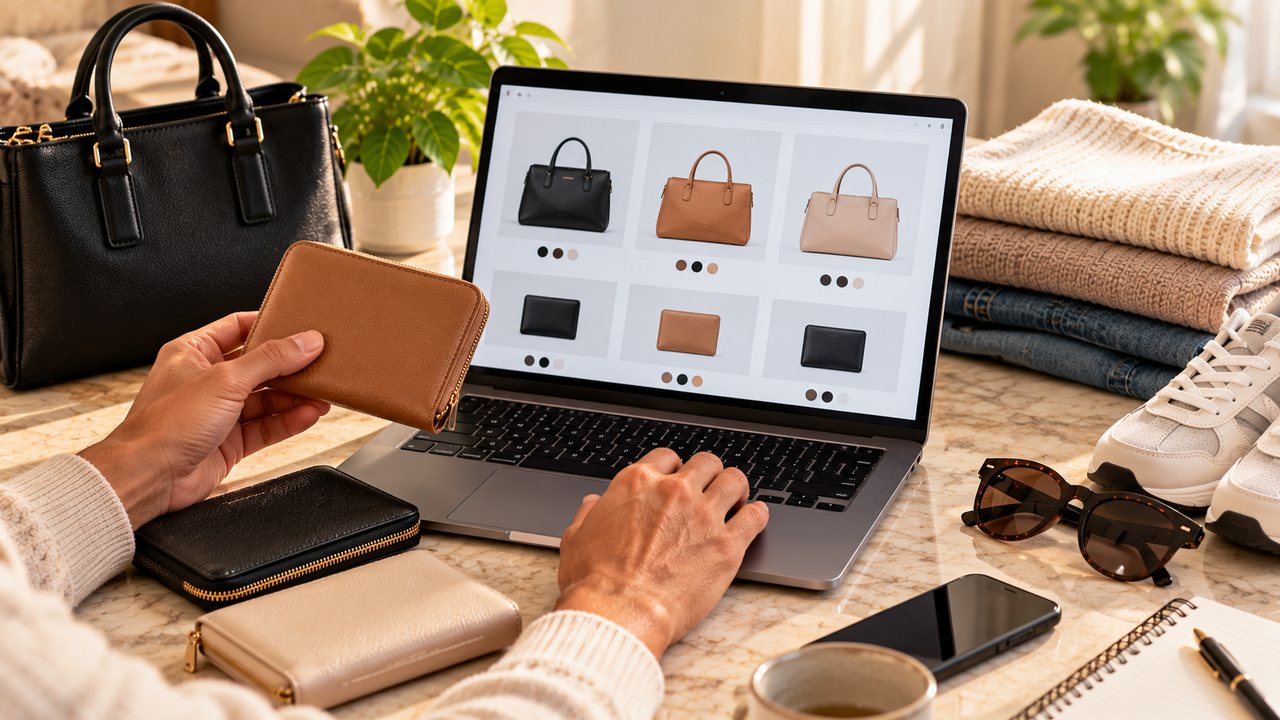
How to Compare Product Quality When Shopping Online
By Aethelles · Published 30 October 2026
Compare product quality online by checking verified specifications, materials, dimensions, photographs, condition, included items, compatibility, safety information and retailer policies. Do not judge quality from price or promotional wording alone.
Start with the intended job
Define what the product must do. A product may look attractive but be too small, incompatible, uncomfortable or difficult to maintain. List essential features and separate them from optional extras.
Read specifications
Words such as premium and durable are broad. Look for dimensions, weight, materials, capacity, model number, power rating, compatibility and care instructions. Ask the retailer if an important specification is missing.
Assess construction and photographs
Review seams, edges, hardware, closures, soles, connectors and moving parts as relevant. Look for multiple photographs and close-ups. For pre-owned goods, actual-item photographs help assess condition.
Condition and inclusions
New and pre-owned products have different histories. Review wear, repairs, missing components and packaging. Confirm exactly what is included; do not assume every photographed accessory comes with the item.
Safety and retailer information
For electronics, check power, compatibility, instructions and applicable safety information. Also review the business identity, contact details, shipping and returns policies.
Compare value
Consider the full cost, including delivery, and compare verified features, condition and suitability. A higher price does not prove better quality and a lower price does not automatically mean poor quality. Aethelles product pages should be assessed individually.
Frequently asked questions
Is expensive always better quality?
No. Compare verified materials, construction, specifications, condition and suitability.
What should a good listing include?
Accurate identity, specifications, dimensions, materials where known, condition where relevant, inclusions and photographs.
Can photos prove quality?
Photos show visible details but cannot prove every material or performance claim.
What if details are unclear?
Ask the retailer before ordering and keep a record of the answer.