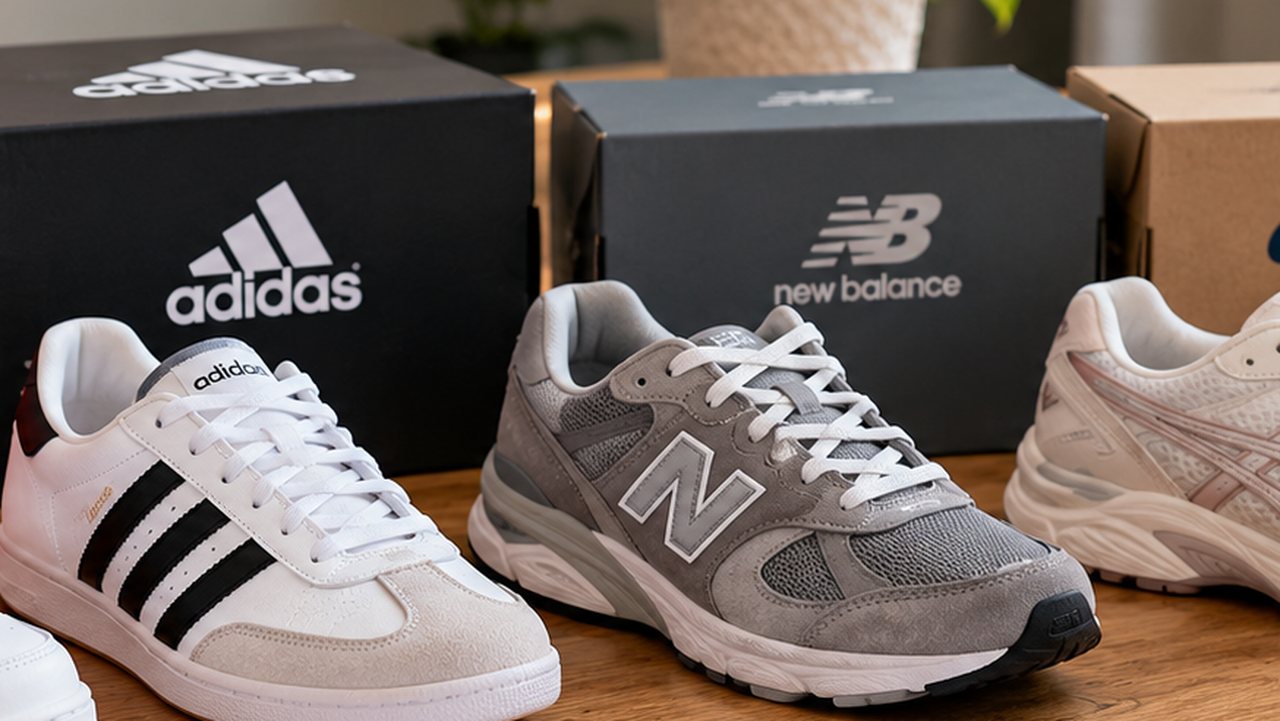
How to Compare Sneaker Sizes Across Different Brands
By Aethelles · Published 30 October 2026
Compare sneaker sizes across brands by measuring both feet, checking whether a chart uses foot length or shoe measurements, consulting the exact model's manufacturer chart and considering width and fit preferences.
Why sizes differ
Brands use different lasts, patterns and sizing conventions. Even within one brand, performance and lifestyle models may fit differently. A labelled size is a reference, not a universal comfort measurement.
Understand size systems
US, UK and EU sizes use different conventions. Centimetre measurements may refer to recommended foot length or another measurement. Read the chart notes and do not combine unrelated charts.
Measure both feet
Stand on a flat surface with your heel against a wall, mark the longest toe and measure. Repeat for both feet and use the larger measurement as a starting point. Measure with the socks you expect to wear.
Use the exact model chart
Check the manufacturer's chart for the model and whether it refers to foot length or insole length. Consider width, toe shape, instep and orthotics.
Pre-owned footwear
A pre-owned pair may have softened or compressed insoles and cushioning. The label remains useful but does not describe full fit or condition. Review listing measurements and ask questions.
Aethelles listings
Aethelles should display the size exactly as recorded. Customers should compare it with the relevant brand chart and contact Aethelles if model or size information is unclear.
Frequently asked questions
Is a US 9 the same in every brand?
No. Sizing varies by brand and model.
Should I size up in every basketball shoe?
No universal rule applies; use model guidance and your fit preference.
Does centimetre sizing always mean foot length?
Not necessarily. Check the manufacturer's chart.
Should I measure both feet?
Yes. Use the larger measurement as a starting point.