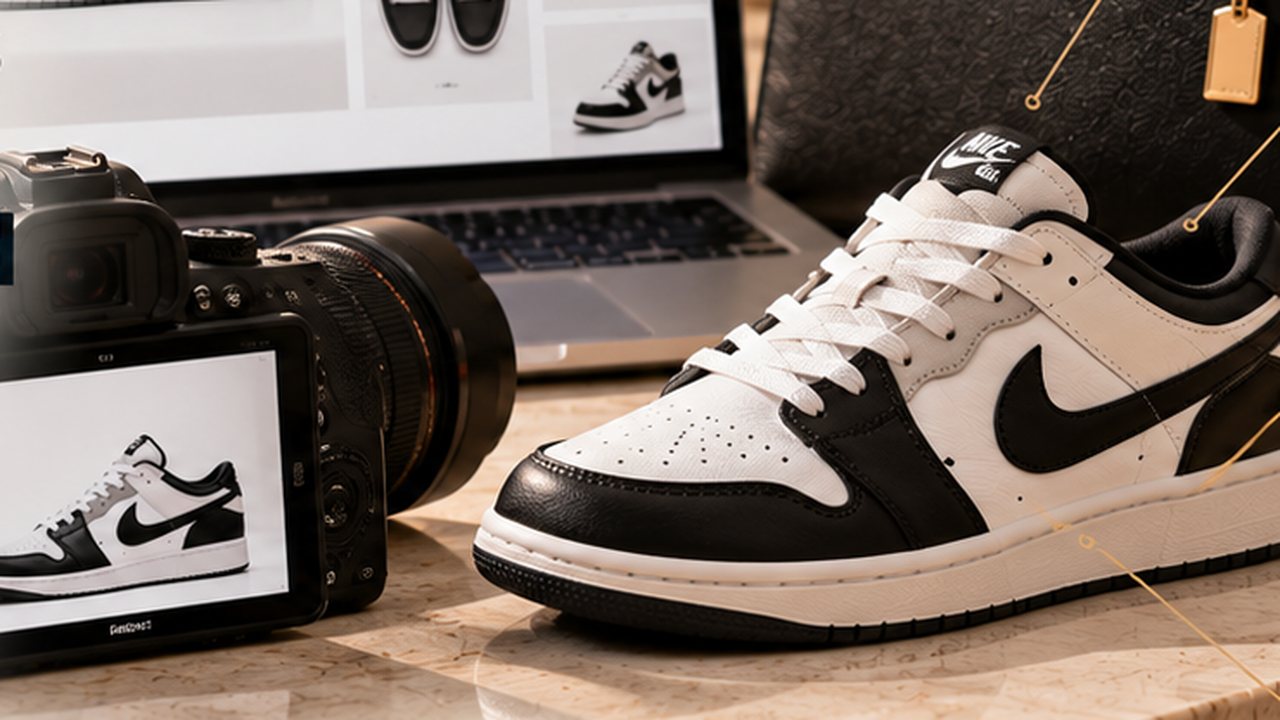
Why Clear Product Photographs Matter When Shopping Pre-Owned
By Aethelles · Published 30 October 2026
Clear product photographs help buyers assess the actual appearance and visible condition of a pre-owned item. Useful images show the whole product from multiple angles, close-ups of wear and any included accessories.
Photographs reduce uncertainty
A pre-owned product is an individual item. Its wear, colour and condition may differ from another example of the same model. Clear images help shoppers see more before deciding, but do not replace the written description.
Show the actual item
For a one-off or pre-owned product, actual-item photographs are important. Manufacturer images show a general design but not the condition of the specific item. Distinguish contextual stock imagery from photographs of the item being sold.
Use multiple angles
Handbags may need front, back, sides, base, interior, corners, handles and hardware. Sneakers may need both sides, toe, heel, soles, insoles and labels. Accessories should show scale, fastening and components where relevant.
Disclose imperfections
Marks, scratches, stains, missing parts and repairs should not be hidden through angles, lighting or editing. Use close-ups and explain defects in writing.
Colour, scale and inclusions
Use consistent lighting and avoid heavy filters. Provide dimensions because photographs distort scale. List accessories that are included; do not imply that every item shown comes with the product.
Photography is not authentication
Images can show visible details but cannot conclusively establish authenticity, material composition or hidden condition. Aethelles' internal inspection is not independent certification.
Frequently asked questions
Should pre-owned listings use stock photos?
Actual-item photos are important for showing the condition of a specific pre-owned product.
How many photos are needed?
Enough to show the whole item, relevant details and known imperfections.
Can photos prove authenticity?
No. Images may support review but cannot conclusively prove authenticity.
Should defects be photographed?
Known visible defects should be shown where practical and described clearly.